


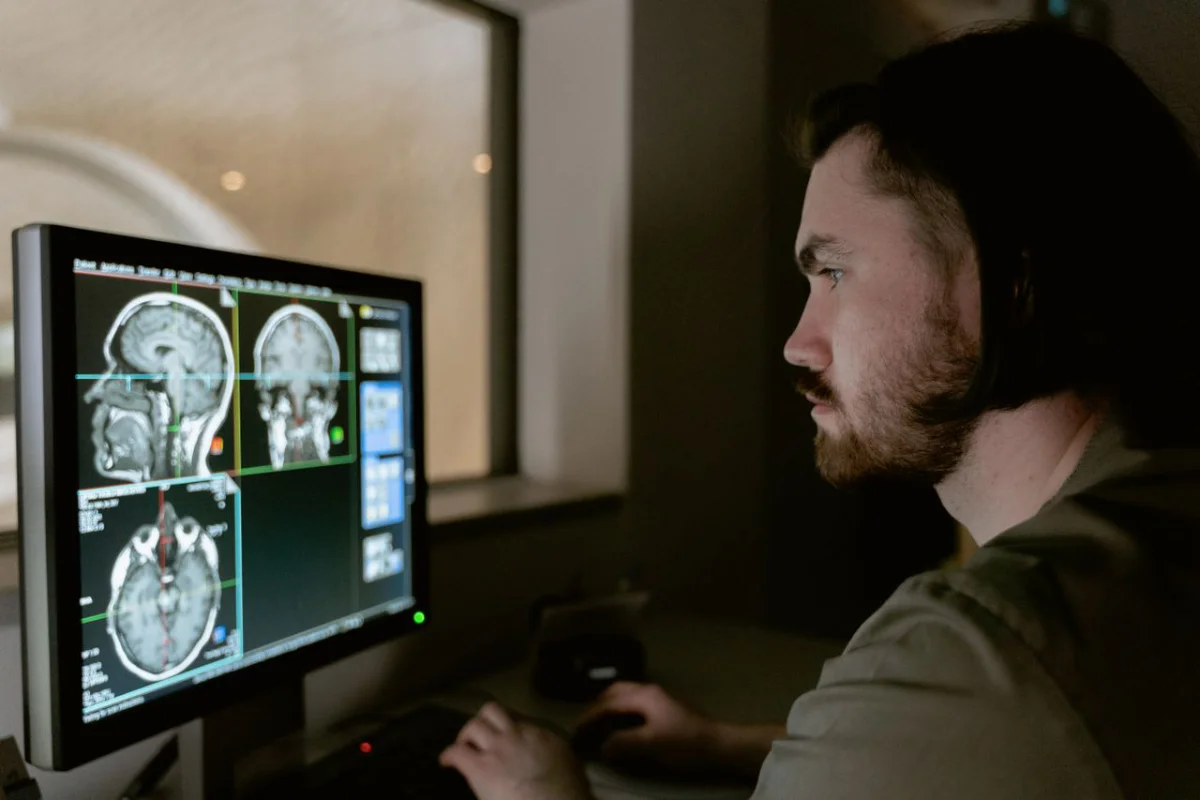
If you’ve been dealing with migraines for months or even years, you’ve probably heard: “Your MRI looks normal.”
While that’s certainly good news because it rules out serious conditions like a tumor or stroke, it can also be incredibly frustrating. After all, if everything looks normal, why are you still losing days to pounding headaches, light sensitivity, nausea, or brain fog?
At Wholistic Healing Experiences, we hear this story all the time. Many of our patients come to us after seeing multiple providers, trying different medications, and undergoing imaging that shows nothing out of the ordinary. They’re relieved their MRI was normal, but they’re still searching for answers. If you’re looking for migraine treatment in Colorado Springs, it’s important to know that a normal brain scan doesn’t always tell the whole story.
Your MRI Is Looking for Structural Problems, Not Functional Ones
An MRI is an excellent tool to help doctors rule out serious medical conditions and give them a detailed picture of the structures inside your brain. But here’s what many people don’t realize: migraines usually aren’t caused by something that shows up on an MRI.
Think about your car for a minute. You could take a picture of the outside, and everything might look perfect. That picture won’t tell you if the engine is misfiring or if there’s an electrical issue keeping it from running the way it should. Your brain works in a similar way.
An MRI shows us what your brain looks like. It doesn’t show us how efficiently your brain, nerves, eyes, and balance system are working together. This is often where the missing piece for people living with chronic migraines.
Migraines Are About More Than Head Pain
One of the biggest misconceptions about migraines is that they’re simply really bad headaches. Anyone who’s experienced one knows that’s far from the truth.
Migraines can affect nearly every part of your day. You might have trouble focusing at work, feel sick to your stomach, become sensitive to lights or sounds, or need to lie down in a dark room until the pain passes. Some people even experience dizziness, blurry vision, or neck pain before the headache begins. That’s because migraines involve your nervous system, not just your head.
At Wholistic Healing, we approach chronic pain and neurological conditions, including migraines, differently. You can learn more here: https://wholistichealingexperiences.com/pain-solutions/
So What’s Really Causing Your Migraines?
Every patient is different, which is why there’s rarely one single answer. But we often find that recurring migraines are connected to functional issues that don’t appear on traditional imaging.
Your Nervous System May Be Stuck on High Alert
Your brain is constantly processing information from your eyes, ears, muscles, joints, and the rest of your body.
When that system becomes overwhelmed, whether from stress, a previous concussion, chronic neck tension, inflammation, poor sleep, or another underlying issue, it can become more sensitive over time. For some people, that sensitivity lowers the threshold for triggering migraines.
Instead of asking, “Why is my MRI normal?” it can be more helpful to ask, “Why has my nervous system become so reactive?”
Your Balance System Could Be Playing a Bigger Role Than You Think
Your inner ears do much more than help you stay upright. They’re constantly communicating with your brain to help control balance, eye movements, and spatial awareness.
When those signals aren’t working together efficiently, your brain has to work harder to process information. For some people, that extra strain may contribute to migraines, dizziness, or motion sensitivity. It’s one of the reasons we evaluate much more than just where your pain is located.
Your Eyes Might Be Working Overtime
If you’ve ever noticed your migraines get worse after staring at a computer all day or driving long distances, your visual system may be part of the puzzle.
Your eyes and brain communicate thousands of times every minute. When those pathways aren’t functioning efficiently, your brain has to work harder to keep up, and that added stress may contribute to recurring migraines.
Why Functional Neurology Is Different
At Wholistic Healing Experiences, we don’t stop at asking, “What does the MRI show?” We ask a different question. “How is your brain functioning?”
Functional Neurology looks at how different parts of your brain communicate with each other and with the rest of your body. Through specialized testing, we can evaluate things like balance, eye movements, coordination, reflexes, and other neurological functions that aren’t visible on a brain scan.
For many patients, this evaluation helps explain symptoms that imaging never could.
Don’t Overlook Your Neck
One thing that surprises many migraine sufferers is how often the neck is involved. The muscles and joints in your upper neck constantly send information to your brain. If those tissues become irritated from poor posture, an old injury, repetitive movements, or muscle tension, they can contribute to migraine symptoms.
That’s why it’s so common for people to notice neck stiffness or soreness before a migraine starts. When we evaluate migraines, we look at the whole picture instead of focusing on just one symptom. This is how we approach migraine treatment in Colorado Springs.
There May Be More Answers Than Your MRI Can Provide
Hearing that your MRI is normal should bring peace of mind, but it shouldn’t be the end of the conversation if you’re still living with migraines.
A normal scan simply tells us that certain serious conditions have been ruled out. It doesn’t explain how your nervous system is functioning or why your brain continues to trigger migraine attacks.
If you’ve been searching for migraine treatment in Colorado Springs, know that there may be answers beyond what traditional imaging can provide. Our goal is to uncover those hidden contributors so you can finally understand what’s driving your symptoms and start moving toward lasting relief.
Take the Next Step Toward Migraine Treatment in Colorado Springs
If you’re tired of hearing that your MRI looks normal while your migraines continue to interfere with your life, we’re here to help. At Wholistic Healing Experiences, we look beyond imaging to evaluate how your brain and nervous system are functioning so we can create a treatment plan that’s built around you.
If you’re ready to find out what’s really driving your migraines, please schedule a consultation today.
Frequently Asked Questions:
Why is my MRI normal if I keep getting migraines?
Most migraines are related to how the brain and nervous system function rather than structural abnormalities. An MRI rules out serious conditions but often cannot identify the functional causes of recurring migraines.
Can Functional Neurology help migraines?
Functional Neurology evaluates how different areas of the brain communicate and function together. Identifying and addressing these deficits may help reduce migraine frequency and severity.
Should everyone with migraines have an MRI?
Not everyone needs an MRI. Your healthcare provider may recommend imaging based on your symptoms, medical history, or neurological examination to rule out more serious conditions.
Can neck problems contribute to migraines?
Yes. Dysfunction in the muscles and joints of the upper neck can send abnormal signals to the brain that may contribute to migraine development in some individuals.
Why do bright lights trigger my migraines?
Visual processing places demands on the brain. If those pathways are already overstressed or functioning inefficiently, bright lights and visually busy environments may trigger migraine symptoms.
What happens during a Functional Neurology evaluation?
The evaluation may include balance testing, eye movement assessments, neurological examinations, and other functional tests that help identify how well your nervous system is working.
Is dizziness related to migraines?
Yes. Many people experience dizziness, vertigo, or balance problems before, during, or between migraine attacks due to involvement of the vestibular system.
Can migraines improve without medication?
Depending on the underlying causes, some people benefit from treatments that address nervous system function, neck dysfunction, movement patterns, and lifestyle factors alongside or in coordination with medical care.